mirror of
https://github.com/apophenia-news/apophenia.news.git
synced 2026-10-29 14:54:54 +00:00

220 lines
35 KiB
HTML
220 lines
35 KiB
HTML
|
|
<!doctype html>
|
|
<html lang="en">
|
|
<head>
|
|
<meta charset="UTF-8" />
|
|
<meta name="viewport" content="width=device-width, initial-scale=1.0" />
|
|
<title>Do We Need Irrevocable Rights to AI Amid This Ban Storm? — apophenia.news</title>
|
|
<meta name="description" content="People report losing access to Claude and ChatGPT over vague safety flags and ordinary-looking work. As AI becomes essential infrastructure, permanent exile without explanation, review, or a path back cannot be the default." />
|
|
<meta property="og:title" content="Do We Need Irrevocable Rights to AI Amid This Ban Storm? — apophenia.news" />
|
|
<meta property="og:description" content="People report losing access to Claude and ChatGPT over vague safety flags and ordinary-looking work. As AI becomes essential infrastructure, permanent exile without explanation, review, or a path back cannot be the default." />
|
|
<meta property="og:type" content="article" />
|
|
<meta property="og:url" content="https://apophenia.news/irrevocable-rights-to-ai/" />
|
|
<meta property="og:image" content="https://free.direct-img.link/lightning+storm?i=5" />
|
|
<meta name="theme-color" content="#fcfcfa" />
|
|
<link rel="canonical" href="https://apophenia.news/irrevocable-rights-to-ai/" />
|
|
<link rel="icon" type="image/svg+xml" href="/favicon.svg" />
|
|
<link rel="alternate" type="application/rss+xml" title="apophenia.news RSS" href="https://apophenia.news/rss.xml" />
|
|
<script data-goatcounter="https://apophenia.goatcounter.com/count" async src="//gc.zgo.at/count.js"></script>
|
|
<script type="module" crossorigin src="/assets/main-CLayDedt.js"></script>
|
|
<link rel="stylesheet" crossorigin href="/assets/main-D0chUPg_.css">
|
|
</head>
|
|
<body>
|
|
|
|
|
|
<header class="sticky top-0 z-40 border-b border-zinc-200/80 bg-paper/95 backdrop-blur">
|
|
<div class="shell py-3 flex items-center justify-between gap-4" x-data="{open:false}">
|
|
<a href="/" class="inline-flex items-center gap-3">
|
|
|
|
<svg class="h-10 w-10 brand-glow" viewBox="0 0 120 120" xmlns="http://www.w3.org/2000/svg" role="img" aria-label="Apophenia News logo">
|
|
<defs>
|
|
<linearGradient id="ap-grad" x1="0" y1="0" x2="1" y2="1">
|
|
<stop offset="0%" stop-color="#4f46e5"/>
|
|
<stop offset="100%" stop-color="#0ea5e9"/>
|
|
</linearGradient>
|
|
</defs>
|
|
<rect x="6" y="6" width="108" height="108" rx="28" fill="#ffffff" stroke="url(#ap-grad)" stroke-width="8"/>
|
|
<circle cx="36" cy="36" r="8" fill="#4f46e5"/>
|
|
<circle cx="84" cy="36" r="8" fill="#0ea5e9"/>
|
|
<circle cx="36" cy="84" r="8" fill="#0ea5e9"/>
|
|
<circle cx="84" cy="84" r="8" fill="#4f46e5"/>
|
|
<path d="M36 36L84 84M84 36L36 84M36 36H84M36 84H84" stroke="#111827" stroke-opacity=".6" stroke-width="4" stroke-linecap="round"/>
|
|
<circle cx="60" cy="60" r="10" fill="#111827"/>
|
|
</svg>
|
|
<div>
|
|
<p class="text-lg leading-none font-bold">apophenia.news</p>
|
|
<p class="text-xs text-zinc-500">for pattern seekers</p>
|
|
</div>
|
|
</a>
|
|
<button class="sm:hidden p-2 rounded-lg border border-zinc-200 bg-white" @click="open=!open" aria-label="Toggle menu">
|
|
<i data-lucide="menu" class="h-4 w-4"></i>
|
|
</button>
|
|
<nav class="hidden sm:flex items-center gap-6 text-sm">
|
|
<a href="/">Home</a>
|
|
<a href="/newsletter/">Newsletter</a>
|
|
<a href="https://store.apophenia.news" target="_blank" rel="noopener">Store</a>
|
|
<a href="/write/">Become a writer</a>
|
|
<a href="/rss.xml">RSS</a>
|
|
</nav>
|
|
<nav class="sm:hidden absolute left-4 right-4 top-[70px] card p-3" x-show="open" x-transition>
|
|
<a class="block py-1.5" href="/">Home</a>
|
|
<a class="block py-1.5" href="/newsletter/">Newsletter</a>
|
|
<a class="block py-1.5" href="https://store.apophenia.news" target="_blank" rel="noopener">Store</a>
|
|
<a class="block py-1.5" href="/write/">Become a writer</a>
|
|
<a class="block py-1.5" href="/rss.xml">RSS</a>
|
|
</nav>
|
|
</div>
|
|
</header>
|
|
|
|
<main class="shell py-10">
|
|
<article class="card overflow-hidden">
|
|
<img src="https://free.direct-img.link/lightning+storm?i=5" alt="Do We Need Irrevocable Rights to AI Amid This Ban Storm?" class="h-64 w-full object-cover" />
|
|
<div class="p-6 sm:p-10">
|
|
<div class="flex items-center justify-between gap-4">
|
|
<p class="text-xs uppercase tracking-wide text-zinc-500">October 23, 2026 • <a href="/author/renox/">Renox</a> and kimi-k3.1-pro</p>
|
|
<button type="button" data-copy-article aria-label="Copy article" class="inline-flex shrink-0 items-center gap-2 rounded-lg border border-zinc-200 bg-white px-2 py-2 text-sm font-medium text-zinc-800 shadow-sm transition hover:bg-zinc-50 focus-visible:outline-none focus-visible:ring-2 focus-visible:ring-indigo-400 sm:px-3">
|
|
<i data-lucide="copy" class="h-4 w-4"></i><span aria-live="polite" class="hidden sm:inline">Copy article</span>
|
|
</button>
|
|
</div>
|
|
<h1 class="mt-2 text-4xl sm:text-5xl font-bold leading-tight">Do We Need Irrevocable Rights to AI Amid This Ban Storm?</h1>
|
|
<p class="mt-4 text-zinc-700 max-w-3xl">People report losing access to Claude and ChatGPT over vague safety flags and ordinary-looking work. As AI becomes essential infrastructure, permanent exile without explanation, review, or a path back cannot be the default.</p>
|
|
<div class="mt-5 flex flex-wrap gap-2">
|
|
<span class="tag">#AI</span><span class="tag">#bans</span><span class="tag">#anthropic</span><span class="tag">#openai</span><span class="tag">#digital-rights</span><span class="tag">#due-process</span><span class="tag">#utilities</span><span class="tag">#reddit</span>
|
|
</div>
|
|
<hr class="my-8 border-zinc-200" />
|
|
<div class="article-prose"><h1>Do We Need Irrevocable Rights to AI Amid This Ban Storm?</h1>
|
|
<p><img src="https://free.direct-img.link/lightning+storm?i=5" alt="Lightning striking from a storm cell over open plains"></p>
|
|
<h2>The Door Just Closes</h2>
|
|
<p>Lately, on Reddit and other online communities, I have been seeing report after report of people being banned from platforms such as Anthropic's Claude and OpenAI's ChatGPT.</p>
|
|
<p>The reasons users encounter range from election interference and safety violations to something as broad as "user wellbeing." What makes these reports especially unsettling is how ordinary the underlying activity often sounds. People say they were making video games, researching their ancestors' genealogy, writing stories, learning to code, or simply experimenting with a tool they had come to depend on.</p>
|
|
<p>Then the account is gone.</p>
|
|
<p>Sometimes the explanation is vague. Sometimes the appeal goes nowhere. And when some users create new accounts, those accounts are banned as well.</p>
|
|
<p>Individual posts are not verdicts. We rarely see the provider's evidence, and a user's account of events may be incomplete. Some bans are almost certainly justified. Companies must be able to stop fraud, malware, exploitation, targeted manipulation, and other serious abuse.</p>
|
|
<p>But the sheer repetition of these stories raises a question larger than whether any particular moderation decision was correct:</p>
|
|
<p><strong>Should a private company be able to exclude someone indefinitely from an increasingly essential general-purpose technology, with little explanation and no meaningful path back?</strong></p>
|
|
<p>I have not been banned. But reading these reports makes me feel that it could happen to me one day—perhaps because of an ambiguous prompt, an automated system misreading context, or a rule I did not realize I had crossed. The most frightening part is the apparent finality: once the door closes, there may be no return.</p>
|
|
<p>That is unacceptable.</p>
|
|
<p><img src="https://free.direct-img.link/padlock+chain?i=1" alt="A gate chained shut with a padlock"></p>
|
|
<h2>AI Is Becoming More Than an App</h2>
|
|
<p>For many people, AI is no longer a novelty. It is becoming part of how they work, learn, write, program, conduct research, run businesses, and navigate everyday problems.</p>
|
|
<p>It can serve as a tutor, an accessibility tool, a research assistant, a creative collaborator, and a small business's first employee. It can help someone turn an idea into a working game, understand a document that would otherwise be impenetrable, or compete with an organization many times their size.</p>
|
|
<p>Nor are these systems perfectly interchangeable. Models differ in capability, cost, availability, and suitability for particular tasks. A person's projects, files, workflows, and integrations may also be tied to one provider.</p>
|
|
<p>Telling someone to "just use another AI" may be reasonable in an isolated dispute. It becomes less convincing when exclusion is permanent, alternatives are limited, or the most valuable capabilities are concentrated among a small number of providers.</p>
|
|
<p>A right that guarantees access only to obsolete tools while everyone else moves ahead with frontier systems would be a right in name only.</p>
|
|
<p><img src="https://free.direct-img.link/power+lines+sunset?i=1" alt="Power lines stretching across an orange sunset"></p>
|
|
<p>The comparison to electricity, water, or gas is not exact. AI is not yet a public utility, and no serious argument requires pretending otherwise. But utilities illustrate an important principle: <strong>as a service becomes essential, society stops treating access to it as an ordinary commercial courtesy.</strong></p>
|
|
<p>We would not consider it acceptable for a water company to cut off a household forever because someone did something wrong, without clear procedures or proportionate consequences. Wrongdoing might justify intervention, penalties, restrictions, or involvement of the law. It would not automatically justify indefinite exile from an essential service.</p>
|
|
<p>AI is moving toward the same territory. The more indispensable it becomes, the less defensible it is to govern access entirely through take-it-or-leave-it terms of service.</p>
|
|
<h2>The Problem Is the Sentence</h2>
|
|
<p>From a company's perspective, a permanent ban can look like the simplest way to eliminate legal and operational risk.</p>
|
|
<p>If a user appears dangerous, deceptive, or simply too costly to assess, cutting off access may seem safer than investigating nuance. Detecting and banning subsequent accounts can then appear to be routine enforcement.</p>
|
|
<p>But a decision that is convenient for a provider is not necessarily just.</p>
|
|
<p>A minor violation, an ambiguous interaction, and a sustained campaign of serious abuse should not all lead to the same outcome. Yet permanent exclusion collapses those distinctions. It turns moderation into something closer to exile: the offense may be unclear, the sentence indefinite, and the appeal process opaque.</p>
|
|
<p>Banning new accounts may be necessary to prevent evasion of legitimate enforcement. From the user's side, however, it can also make the punishment feel inescapable. There is no completed sentence, no demonstrated rehabilitation, and no route back to good standing—only a closed door.</p>
|
|
<p>That is heartbreaking. Not merely because someone lost a subscription, but because their tools, projects, and place in an AI-mediated future may have disappeared with it.</p>
|
|
<p><strong>A right to access is not a right to impunity. It is a right not to be abandoned by the system without proportionality or recourse.</strong></p>
|
|
<p><img src="https://free.direct-img.link/long+road+horizon?i=3" alt="An empty frozen road stretching toward the horizon"></p>
|
|
<h2>Safety Is Not the Opposite of Rights</h2>
|
|
<p>An irrevocable right to AI cannot mean a right to do anything with it.</p>
|
|
<p>Providers must be able to protect other users, prevent serious abuse, comply with the law, and stop activity that creates real harm. They need tools such as rate limits, content restrictions, temporary suspensions, and, in severe cases, account termination.</p>
|
|
<p>Recognizing a right to access does not require companies to host criminal activity or ignore imminent risks.</p>
|
|
<p>But safety and due process are not competing values. A platform can act quickly to contain a threat while still providing a fair process afterward.</p>
|
|
<p>Broad categories such as "election interference" and "user wellbeing" make this especially important. Election-related abuse can be serious, but legitimate political discussion must not be casually confused with manipulation. Wellbeing interventions may sometimes be necessary, but a system intended to protect someone should not leave that person permanently locked out, with no intelligible explanation and no meaningful review.</p>
|
|
<p>The question is not whether companies may enforce rules. They must. The question is whether every enforcement decision should carry the possibility of a digital life sentence.</p>
|
|
<h2>What an Irrevocable Right Should Mean</h2>
|
|
<p>The right we need is not a right to unlimited computing power, free access to every premium model, or an unconditional relationship with every provider. No one has a natural entitlement to infinite GPU time or a company's newest system regardless of cost.</p>
|
|
<p>The stronger and more reasonable claim is this:</p>
|
|
<p><strong>No person should be permanently denied meaningful participation in general-purpose AI merely through an opaque, unreviewable private decision.</strong></p>
|
|
<p>The underlying right should be irrevocable, even when particular activities or capabilities can be restricted. That principle could be supported by several practical guarantees:</p>
|
|
<ol>
|
|
<li><p><strong>A right to know why.</strong> Every serious restriction should come with a specific explanation of the rule involved and enough information to understand the decision. "Policy violation" is a category, not an explanation. Providers can protect confidential detection methods without leaving users completely in the dark.</p>
|
|
</li>
|
|
<li><p><strong>A right to meaningful appeal.</strong> A banned user should not need access to the banned account in order to request access back. Appeals should have a reachable process, a reasonable timeframe, and a clear outcome.</p>
|
|
</li>
|
|
<li><p><strong>A right to human review.</strong> Automation can flag risk, but permanent or otherwise severe exclusion should not rest solely on an unchallengeable automated classification. The reviewer needs actual authority to reverse the decision.</p>
|
|
</li>
|
|
<li><p><strong>A right to proportionality.</strong> Warnings, feature restrictions, rate limits, temporary suspensions, and supervised access should be considered before permanent exclusion, except where immediate severe action is genuinely necessary.</p>
|
|
</li>
|
|
<li><p><strong>A right to a path back.</strong> Where circumstances allow, users should be able to return after a defined period, demonstrate changed behavior, or regain limited access under appropriate safeguards. A punishment without an end date should never be the casual default.</p>
|
|
</li>
|
|
<li><p><strong>A right to retrieve one's own work.</strong> Users should be able to export their lawful conversations, research, code, and creative work rather than losing years of intellectual output along with an account. Access to that data can be separated from access to the model.</p>
|
|
</li>
|
|
<li><p><strong>A right to meaningful transparency.</strong> Major providers should publish aggregate information about enforcement categories, permanent bans, appeals, and reversal rates so the public can evaluate how these powers are used. Account counts alone are not enough; companies should distinguish accounts from people wherever possible.</p>
|
|
</li>
|
|
</ol>
|
|
<p>For dominant providers, these obligations may eventually need legal backing rather than voluntary promises. A competitive market can help, but competition alone does not guarantee due process.</p>
|
|
<p><img src="https://free.direct-img.link/gavel?i=1" alt="A gavel resting on a courtroom bench"></p>
|
|
<h2>The Hard Cases Are Real</h2>
|
|
<p>What about someone attempting to build a bioweapon, coordinate violence, exploit children, or conduct large-scale fraud?</p>
|
|
<p>Should that person receive unconditional access?</p>
|
|
<p>No—and this framework does not say they should.</p>
|
|
<p>Rights to speech, property, movement, and liberty can all be restricted in response to serious harm. What distinguishes a rights-based system is that severe restrictions require strong justification, proportionality, and review. Emergency action may come first when danger is imminent, but process cannot be abandoned forever afterward.</p>
|
|
<p>Where safe, restriction can mean capability-limited access rather than total exile. Where safe access is impossible, suspension or termination may be necessary. The point is not that every person must retain every capability under every circumstance. The point is that an ambiguous flag, a minor violation, and a proven campaign of serious abuse must not all be processed through the same permanent trapdoor.</p>
|
|
<p>You do not cut power to an entire neighborhood because one house presents a danger. You isolate the danger.</p>
|
|
<p><img src="https://free.direct-img.link/city+lights+night?i=2" alt="A city still lit up at night"></p>
|
|
<h2>Access Should Not Be a Revocable Favor</h2>
|
|
<p>A terms-of-service clause stating that an account may be terminated at any time is not a complete moral answer.</p>
|
|
<p>Contract language can explain a company's legal position. It cannot, by itself, settle what society should tolerate when a service becomes foundational to economic and intellectual life.</p>
|
|
<p>We should therefore stop framing this solely as a dispute between unhappy customers and their apps. It is a question about the distribution of opportunity.</p>
|
|
<p>If AI becomes a basic instrument for learning, working, and creating, then permanent exclusion can carry consequences far beyond losing a chatbot. It can mean losing access to capabilities that shape a person's ability to compete and participate. The fact that a decision is made by a private company does not make those consequences trivial.</p>
|
|
<p>The goal is not to force every company to serve every person under all circumstances. It is to establish that exclusion must be justified, proportionate, reviewable, and—wherever possible—temporary.</p>
|
|
<p>AI companies often speak about ensuring that humanity benefits from their technology. That promise cannot apply only to people whose accounts never encounter an enforcement error. Rights matter most precisely when a system believes someone has done something wrong.</p>
|
|
<p>The more essential AI becomes, the more its governance must resemble the governance of infrastructure rather than the management of a private club.</p>
|
|
<p><strong>No lifetime exile by default. No permanent punishment for ambiguous offenses. No essential future in which access exists only at the unchecked discretion of a few platforms.</strong></p>
|
|
<p>We do not need a right to misuse AI.</p>
|
|
<p>We need a right not to lose our place in an AI-mediated society without a fair way to be heard—and, where possible, a fair way back.</p>
|
|
<hr>
|
|
<p><em>Apophenia News — finding patterns in the noise since 2026</em></p>
|
|
<p><em>Access can be limited. Human worth cannot be banned.</em></p>
|
|
</div>
|
|
</div>
|
|
<script id="article-markdown" type="application/json">"---\ntitle: \"Do We Need Irrevocable Rights to AI Amid This Ban Storm?\"\nslug: irrevocable-rights-to-ai\ndate: 2026-10-23\nauthor: \"[Renox](/author/renox/) and kimi-k3.1-pro\"\ndescription: \"People report losing access to Claude and ChatGPT over vague safety flags and ordinary-looking work. As AI becomes essential infrastructure, permanent exile without explanation, review, or a path back cannot be the default.\"\nheader_image: https://free.direct-img.link/lightning+storm?i=5\ntags:\n - AI\n - bans\n - anthropic\n - openai\n - digital-rights\n - due-process\n - utilities\n - reddit\n---\n\n# Do We Need Irrevocable Rights to AI Amid This Ban Storm?\n\n\n\n## The Door Just Closes\n\nLately, on Reddit and other online communities, I have been seeing report after report of people being banned from platforms such as Anthropic's Claude and OpenAI's ChatGPT.\n\nThe reasons users encounter range from election interference and safety violations to something as broad as \"user wellbeing.\" What makes these reports especially unsettling is how ordinary the underlying activity often sounds. People say they were making video games, researching their ancestors' genealogy, writing stories, learning to code, or simply experimenting with a tool they had come to depend on.\n\nThen the account is gone.\n\nSometimes the explanation is vague. Sometimes the appeal goes nowhere. And when some users create new accounts, those accounts are banned as well.\n\nIndividual posts are not verdicts. We rarely see the provider's evidence, and a user's account of events may be incomplete. Some bans are almost certainly justified. Companies must be able to stop fraud, malware, exploitation, targeted manipulation, and other serious abuse.\n\nBut the sheer repetition of these stories raises a question larger than whether any particular moderation decision was correct:\n\n**Should a private company be able to exclude someone indefinitely from an increasingly essential general-purpose technology, with little explanation and no meaningful path back?**\n\nI have not been banned. But reading these reports makes me feel that it could happen to me one day—perhaps because of an ambiguous prompt, an automated system misreading context, or a rule I did not realize I had crossed. The most frightening part is the apparent finality: once the door closes, there may be no return.\n\nThat is unacceptable.\n\n\n\n## AI Is Becoming More Than an App\n\nFor many people, AI is no longer a novelty. It is becoming part of how they work, learn, write, program, conduct research, run businesses, and navigate everyday problems.\n\nIt can serve as a tutor, an accessibility tool, a research assistant, a creative collaborator, and a small business's first employee. It can help someone turn an idea into a working game, understand a document that would otherwise be impenetrable, or compete with an organization many times their size.\n\nNor are these systems perfectly interchangeable. Models differ in capability, cost, availability, and suitability for particular tasks. A person's projects, files, workflows, and integrations may also be tied to one provider.\n\nTelling someone to \"just use another AI\" may be reasonable in an isolated dispute. It becomes less convincing when exclusion is permanent, alternatives are limited, or the most valuable capabilities are concentrated among a small number of providers.\n\nA right that guarantees access only to obsolete tools while everyone else moves ahead with frontier systems would be a right in name only.\n\n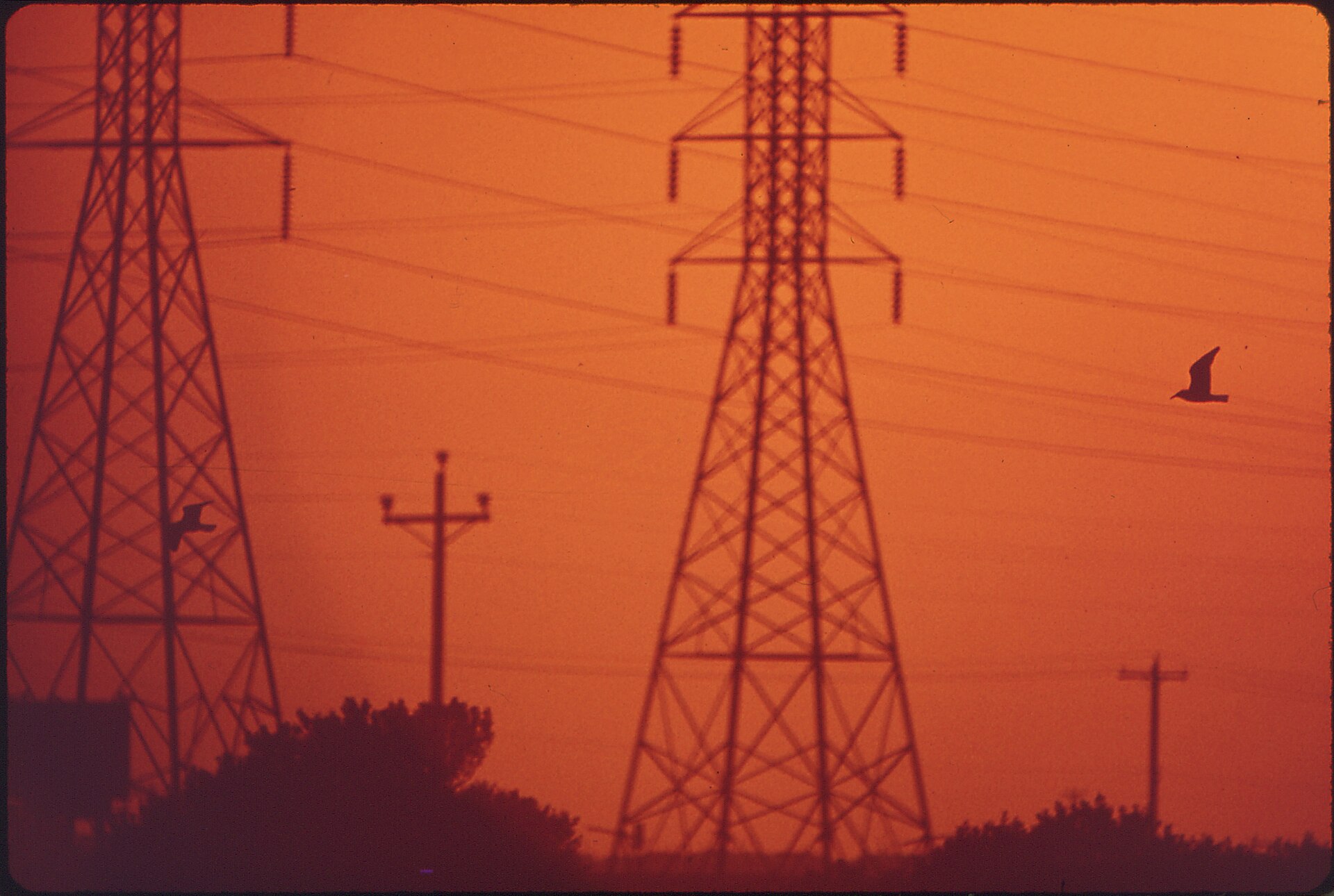\n\nThe comparison to electricity, water, or gas is not exact. AI is not yet a public utility, and no serious argument requires pretending otherwise. But utilities illustrate an important principle: **as a service becomes essential, society stops treating access to it as an ordinary commercial courtesy.**\n\nWe would not consider it acceptable for a water company to cut off a household forever because someone did something wrong, without clear procedures or proportionate consequences. Wrongdoing might justify intervention, penalties, restrictions, or involvement of the law. It would not automatically justify indefinite exile from an essential service.\n\nAI is moving toward the same territory. The more indispensable it becomes, the less defensible it is to govern access entirely through take-it-or-leave-it terms of service.\n\n## The Problem Is the Sentence\n\nFrom a company's perspective, a permanent ban can look like the simplest way to eliminate legal and operational risk.\n\nIf a user appears dangerous, deceptive, or simply too costly to assess, cutting off access may seem safer than investigating nuance. Detecting and banning subsequent accounts can then appear to be routine enforcement.\n\nBut a decision that is convenient for a provider is not necessarily just.\n\nA minor violation, an ambiguous interaction, and a sustained campaign of serious abuse should not all lead to the same outcome. Yet permanent exclusion collapses those distinctions. It turns moderation into something closer to exile: the offense may be unclear, the sentence indefinite, and the appeal process opaque.\n\nBanning new accounts may be necessary to prevent evasion of legitimate enforcement. From the user's side, however, it can also make the punishment feel inescapable. There is no completed sentence, no demonstrated rehabilitation, and no route back to good standing—only a closed door.\n\nThat is heartbreaking. Not merely because someone lost a subscription, but because their tools, projects, and place in an AI-mediated future may have disappeared with it.\n\n**A right to access is not a right to impunity. It is a right not to be abandoned by the system without proportionality or recourse.**\n\n\n\n## Safety Is Not the Opposite of Rights\n\nAn irrevocable right to AI cannot mean a right to do anything with it.\n\nProviders must be able to protect other users, prevent serious abuse, comply with the law, and stop activity that creates real harm. They need tools such as rate limits, content restrictions, temporary suspensions, and, in severe cases, account termination.\n\nRecognizing a right to access does not require companies to host criminal activity or ignore imminent risks.\n\nBut safety and due process are not competing values. A platform can act quickly to contain a threat while still providing a fair process afterward.\n\nBroad categories such as \"election interference\" and \"user wellbeing\" make this especially important. Election-related abuse can be serious, but legitimate political discussion must not be casually confused with manipulation. Wellbeing interventions may sometimes be necessary, but a system intended to protect someone should not leave that person permanently locked out, with no intelligible explanation and no meaningful review.\n\nThe question is not whether companies may enforce rules. They must. The question is whether every enforcement decision should carry the possibility of a digital life sentence.\n\n## What an Irrevocable Right Should Mean\n\nThe right we need is not a right to unlimited computing power, free access to every premium model, or an unconditional relationship with every provider. No one has a natural entitlement to infinite GPU time or a company's newest system regardless of cost.\n\nThe stronger and more reasonable claim is this:\n\n**No person should be permanently denied meaningful participation in general-purpose AI merely through an opaque, unreviewable private decision.**\n\nThe underlying right should be irrevocable, even when particular activities or capabilities can be restricted. That principle could be supported by several practical guarantees:\n\n1. **A right to know why.** Every serious restriction should come with a specific explanation of the rule involved and enough information to understand the decision. \"Policy violation\" is a category, not an explanation. Providers can protect confidential detection methods without leaving users completely in the dark.\n\n2. **A right to meaningful appeal.** A banned user should not need access to the banned account in order to request access back. Appeals should have a reachable process, a reasonable timeframe, and a clear outcome.\n\n3. **A right to human review.** Automation can flag risk, but permanent or otherwise severe exclusion should not rest solely on an unchallengeable automated classification. The reviewer needs actual authority to reverse the decision.\n\n4. **A right to proportionality.** Warnings, feature restrictions, rate limits, temporary suspensions, and supervised access should be considered before permanent exclusion, except where immediate severe action is genuinely necessary.\n\n5. **A right to a path back.** Where circumstances allow, users should be able to return after a defined period, demonstrate changed behavior, or regain limited access under appropriate safeguards. A punishment without an end date should never be the casual default.\n\n6. **A right to retrieve one's own work.** Users should be able to export their lawful conversations, research, code, and creative work rather than losing years of intellectual output along with an account. Access to that data can be separated from access to the model.\n\n7. **A right to meaningful transparency.** Major providers should publish aggregate information about enforcement categories, permanent bans, appeals, and reversal rates so the public can evaluate how these powers are used. Account counts alone are not enough; companies should distinguish accounts from people wherever possible.\n\nFor dominant providers, these obligations may eventually need legal backing rather than voluntary promises. A competitive market can help, but competition alone does not guarantee due process.\n\n\n\n## The Hard Cases Are Real\n\nWhat about someone attempting to build a bioweapon, coordinate violence, exploit children, or conduct large-scale fraud?\n\nShould that person receive unconditional access?\n\nNo—and this framework does not say they should.\n\nRights to speech, property, movement, and liberty can all be restricted in response to serious harm. What distinguishes a rights-based system is that severe restrictions require strong justification, proportionality, and review. Emergency action may come first when danger is imminent, but process cannot be abandoned forever afterward.\n\nWhere safe, restriction can mean capability-limited access rather than total exile. Where safe access is impossible, suspension or termination may be necessary. The point is not that every person must retain every capability under every circumstance. The point is that an ambiguous flag, a minor violation, and a proven campaign of serious abuse must not all be processed through the same permanent trapdoor.\n\nYou do not cut power to an entire neighborhood because one house presents a danger. You isolate the danger.\n\n\n\n## Access Should Not Be a Revocable Favor\n\nA terms-of-service clause stating that an account may be terminated at any time is not a complete moral answer.\n\nContract language can explain a company's legal position. It cannot, by itself, settle what society should tolerate when a service becomes foundational to economic and intellectual life.\n\nWe should therefore stop framing this solely as a dispute between unhappy customers and their apps. It is a question about the distribution of opportunity.\n\nIf AI becomes a basic instrument for learning, working, and creating, then permanent exclusion can carry consequences far beyond losing a chatbot. It can mean losing access to capabilities that shape a person's ability to compete and participate. The fact that a decision is made by a private company does not make those consequences trivial.\n\nThe goal is not to force every company to serve every person under all circumstances. It is to establish that exclusion must be justified, proportionate, reviewable, and—wherever possible—temporary.\n\nAI companies often speak about ensuring that humanity benefits from their technology. That promise cannot apply only to people whose accounts never encounter an enforcement error. Rights matter most precisely when a system believes someone has done something wrong.\n\nThe more essential AI becomes, the more its governance must resemble the governance of infrastructure rather than the management of a private club.\n\n**No lifetime exile by default. No permanent punishment for ambiguous offenses. No essential future in which access exists only at the unchecked discretion of a few platforms.**\n\nWe do not need a right to misuse AI.\n\nWe need a right not to lose our place in an AI-mediated society without a fair way to be heard—and, where possible, a fair way back.\n\n---\n\n*Apophenia News — finding patterns in the noise since 2026*\n\n*Access can be limited. Human worth cannot be banned.*\n"</script>
|
|
</article>
|
|
|
|
|
|
<section class="mt-10 card overflow-hidden bg-gradient-to-b from-white to-indigo-50/60">
|
|
<div class="p-6 sm:p-8 grid sm:grid-cols-[1fr,340px] gap-8 items-center">
|
|
<div>
|
|
<p class="tag mb-3"><i data-lucide="shopping-bag" class="h-3.5 w-3.5"></i>Merch</p>
|
|
<h2 class="text-2xl sm:text-3xl font-bold leading-tight">Wear the pattern</h2>
|
|
<p class="mt-3 text-zinc-700 max-w-md">
|
|
The <strong>Pattern Seeker</strong> heavy-blend zip hoodie — constellation print across the back, quiet mark on the chest.
|
|
</p>
|
|
<a href="https://store.apophenia.news/products/pattern-seeker" target="_blank" rel="noopener"
|
|
class="mt-5 inline-flex items-center gap-2 rounded-xl bg-accent px-5 py-3 text-sm font-medium text-white transition hover:bg-indigo-700">
|
|
Shop the hoodie <i data-lucide="arrow-up-right" class="h-4 w-4"></i>
|
|
</a>
|
|
<p class="mt-3 text-xs text-zinc-500 hidden sm:block">Hover a shot to zoom the print.</p>
|
|
</div>
|
|
<div class="grid grid-cols-2 gap-3">
|
|
<a href="https://store.apophenia.news/products/pattern-seeker" target="_blank" rel="noopener" aria-label="Pattern Seeker zip hoodie — chest mark"
|
|
class="block overflow-hidden rounded-xl bg-white/40">
|
|
<img src="/merch/apophenia_hoodie_front.avif" alt="Pattern Seeker zip hoodie — chest mark" loading="lazy" decoding="async"
|
|
class="w-full origin-[61%_29%] transition-transform duration-500 ease-out hover:scale-[2.4]" />
|
|
</a>
|
|
<a href="https://store.apophenia.news/products/pattern-seeker" target="_blank" rel="noopener" aria-label="Pattern Seeker zip hoodie — constellation back print"
|
|
class="block overflow-hidden rounded-xl bg-white/40">
|
|
<img src="/merch/apophenia_hoodie_back.webp" alt="Pattern Seeker zip hoodie — constellation back print" loading="lazy" decoding="async"
|
|
class="w-full origin-[50%_38%] transition-transform duration-500 ease-out hover:scale-[2.1]" />
|
|
</a>
|
|
</div>
|
|
</div>
|
|
</section>
|
|
|
|
|
|
<div class="mt-8">
|
|
<a href="/" class="inline-flex items-center gap-2 text-sm">
|
|
<i data-lucide="arrow-left" class="h-4 w-4"></i> Back to Home
|
|
</a>
|
|
</div>
|
|
</main>
|
|
|
|
<footer class="mt-16 border-t border-zinc-200 bg-white/70">
|
|
<div class="shell py-8 text-sm text-zinc-600 flex flex-col sm:flex-row justify-between gap-2">
|
|
<p>Apophenia News — finding patterns in the noise since 2026</p>
|
|
<p><a href="https://youtube.com/@ApopheniaLoop" target="_blank" rel="noopener" class="hover:text-zinc-900 hover:underline">YouTube</a> · © 2026 apophenia.news</p>
|
|
</div>
|
|
</footer>
|
|
</body>
|
|
</html>
|